Irma P. Hall died a few weeks ago. If you don’t know who that is, she played Big Mama in the movie Soul Food. So naturally, I had to rewatch the movie I hadn’t seen in years.
Witnessing the family partake in Sunday dinner with traditional southern dishes filling the table not only reminded me of how my mother used to cook every Sunday for us, but it also reminded me how “soul food” is a dying custom.
I don’t remember my mom making tacos for dinner, nor do I remember many pasta dishes. Yet, here I am, married to my partially Italian husband, making pasta, tacos and Asian dishes for family dinners.
I really feel like I dropped the ball with my kiddos, because when it comes to traditional “black” meals, they are not having it – except for the macaroni and cheese.
How and ever, I have been sure to keep some of those dishes on the table during the holidays, especially Thanksgiving.
But what I didn’t think would happen is that I would slowly be taking on the role as the family matriarch. My mom is now 80 years old. She has been in the kitchen for years, so now, she’s tired of prepping and living in the kitchen on the days leading up to the holidays. Rightfully so.
I have 2 older brothers who are both married. So naturally, I assumed the role of holiday chef would go to one of their wives.
But one day, I realized all those days of watching my mom in the kitchen and inevitably inheriting her recipes and cooking style has made me the one the family turns to in order to keep the southern specialties alive in our family.
So guess what I’ll be doing this week…
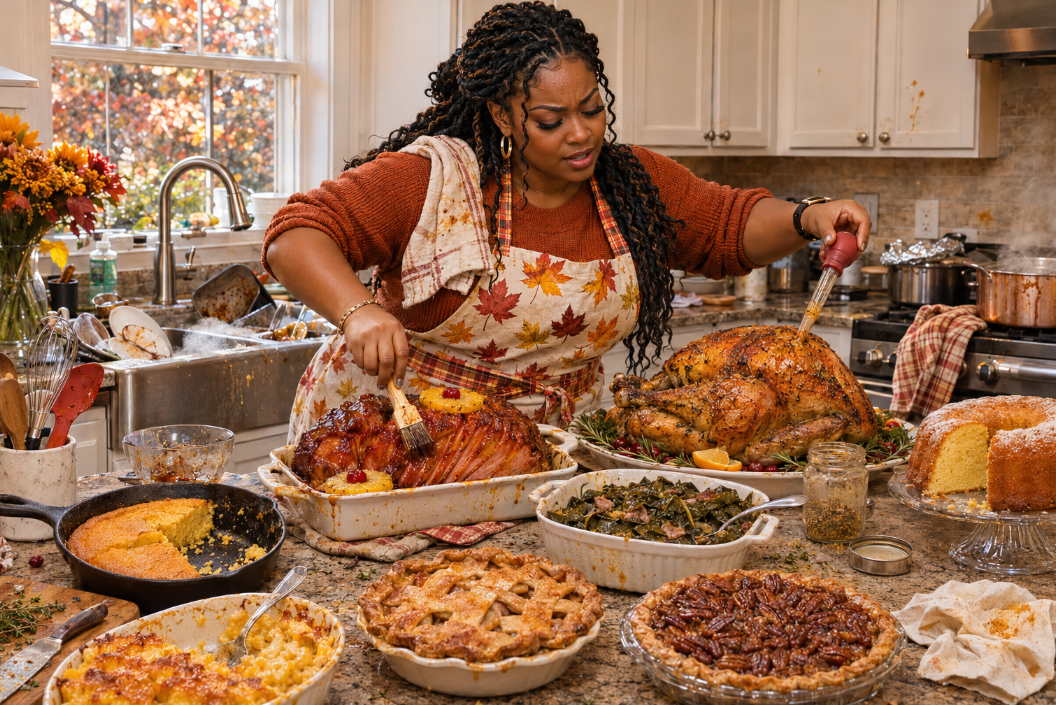
Dicing sweet potatoes, shredding 6 different cheeses, baking pound cakes, apple pie, pecan pie and an egg custard pie (just for mom), glazing a ham, brining a turkey, steaming collard greens and living in the kitchen.
Do I get great joy watching my family grab plate after plate of my food? Yes.
Do I actually like cooking? No.
Which is why I don’t do Sunday dinner or anything of the sort.
There’s a level of love, patience and skill that goes into those elaborate meals, and I don’t want to do it.
How and ever, my laziness is partially responsible for my kids’ disdain for soul food, and I feel even more responsible for allowing these cultural traditions to stop with me.
My son doesn’t cook. My daughter admires Asian culture more than her own – so sushi, matcha, boba and noodles are her things – fried chicken, collard greens, sweet tea and cornbread, not so much.
These foods are a part of our history, so maybe I should make more of an effort to incorporate more of them in our daily meals and not just break out the recipes in November.
Instead of doing a Sunday dinner every week, maybe I’ll start with once a month.
I make no promises though.
Plus, if I’m slaving away in the kitchen for hours, and these people say they don’t like it or refuse to eat it – y’all will read about me in the news.
I’ll try it though. Just because I really feel guilty about black culture being almost non-existent in my home.
I know it’s not something I should feel guilty about, but when I think about it – guilt is always nearby, and I can’t help it.
Now, there are some things that you will never ever ever see me trying to force on the family, and that’s pig’s feet, chitlins and hogmaws. I draw the line at southern black culture there.
Besides I don’t even eat pork after seeing our family pet, Wilbur, with a stick going from his rooter to his tooter being roasted whole at the family’s Fourth of July cookout more than 30 years ago. Maybe I’ll tell the story of that trauma another day - that way y’all can enjoy your pork on Thursday.
And to be really honest, I’m not even cooking the ham on Thursday, my daughter is. I guess I didn’t fail as bad as I think I did – at least she learned something.
But anywho, y’all have an amazing Thanksgiving filled with love, joy and plates piled up to the ceiling.
See ya next week.
If you're feeling overwhelmed, you're not alone. Support from a therapist can help you navigate these emotions and find practical ways to care for yourself. The clinicians at New Chapter Counseling Services specialize in supporting women through life transitions, pregnancy, postpartum, and everyday mental health challenges.